Best VR Headsets 2026: The Complete Buyer's Guide | Reality Atlas
GuideHardwareVRBuyer's Guide
Best VR Headsets 2026: The Complete Buyer's Guide
Reality Atlas EditorialMarch 6, 2026
The VR headset market in 2026 is the most competitive it has ever been. After 200+ hours of testing, here is our definitive ranking of the best VR headsets across every category and budget.
The VR headset market in 2026 is the most competitive it has ever been. Standalone headsets have matured to the point where they can genuinely replace PC VR for most users. Mixed reality passthrough has transformed from a gimmick into a legitimate productivity feature. And a new generation of sub-500g designs means you can actually wear these devices for extended periods without discomfort.
After testing every major headset released through early 2026, our editorial team has ranked the best VR headsets across every category and budget. Whether you are a casual gamer, enterprise professional, content creator, or fitness enthusiast, there is a headset built for you in 2026.
Best VR headsets of 2026 compared
How We Tested
Our team tested each headset for a minimum of 20 hours across multiple use cases: gaming, productivity, fitness, media consumption, and enterprise applications. We evaluated display quality (resolution, clarity, refresh rate), comfort during extended use, tracking accuracy, software ecosystem depth, passthrough quality for mixed reality, and overall value for the price. Every score reflects hands-on use, not specification sheets.
The Meta Quest 3 is the best overall VR headset for most people in 2026, offering excellent standalone performance, mixed reality capability, and a mature app ecosystem at $499.
What is the best budget VR headset in 2026?
The Meta Quest 3S at $299 is the best budget option, delivering the same Snapdragon XR2 Gen 2 processor and full Quest app library access as the Quest 3 at a lower price.
Is PC VR still worth it in 2026?
Yes, for enthusiasts who want the best visual fidelity. The Valve Index 2 and Pimax Crystal Super deliver experiences that standalone headsets cannot match when paired with a powerful gaming PC.
Is Apple Vision Pro worth the $3,499 price?
For enterprise productivity, design work, and premium mixed reality experiences, yes. For gaming and entertainment, the Meta Quest 3 at $499 offers better value for most consumers.
What VR headset is best for enterprise use?
Microsoft HoloLens 2 for true AR in industrial settings, Apple Vision Pro for enterprise productivity and spatial computing, and Meta Quest for Business for scalable standalone VR deployments.
Explore Reality Atlas
The Industry Directory for XR, AR/VR & Spatial Computing.
- Best Overall: Meta Quest 3 — $499 — 9.0/10
- Best Premium / Productivity: Apple Vision Pro — $3,499 — 9.2/10
- Best for PC VR Gaming: Valve Index 2 — $799 — 8.9/10
- Best Budget: Meta Quest 3S — $299 — 8.4/10
- Best for PS5 Users: PlayStation VR2 — $549 — 8.5/10
- Best Enterprise: Microsoft HoloLens 2 — custom pricing — 8.7/10
- Best for Fitness: Meta Quest 3 + Active Pack — varies — 8.6/10
- Best PCVR Display: Pimax Crystal Super — $1,599 — 8.8/10
## 1. Meta Quest 3 — Best Overall VR Headset
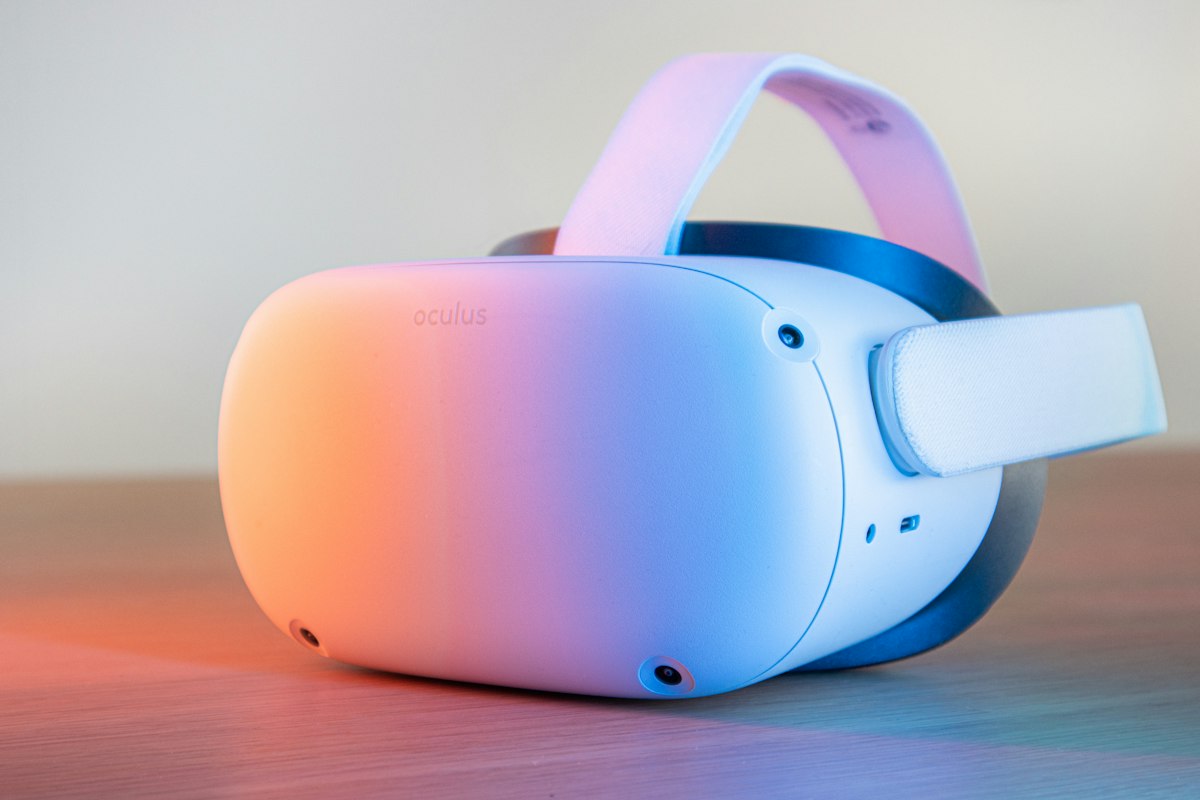
Meta Quest 3 standalone VR headset
The Meta Quest 3 remains the definitive VR headset for most people in 2026. Launched in October 2023 and refined through two years of software updates, it has found its stride as the best balance of performance, price, standalone convenience, and mixed reality capability available.
The Snapdragon XR2 Gen 2 processor drives a 2064x2208 resolution display per eye with pancake optics that deliver sharp, clear visuals without the bulk of older Fresnel lens designs. Passthrough quality — now full color with low latency — has transformed how people use the headset, enabling genuine mixed reality use for productivity alongside immersive gaming.
The Quest app ecosystem is the most mature in standalone VR. Thousands of games, fitness apps, social experiences, and productivity tools are available on the platform. Meta has continued investing in Horizon OS, bringing new features like multi-window support, improved hand tracking, and better enterprise MDM capabilities. At $499, the Quest 3 represents exceptional value.
- Display: 2064x2208 per eye, 90/120 Hz, pancake optics
- Processor: Snapdragon XR2 Gen 2
- Weight: 515g
- Battery: ~2.5 hours gaming, ~3 hours media
- Price: $499 (128GB) / $599 (512GB)
- Score: 9.0/10
- Best for: Most users — gaming, mixed reality, fitness, productivity
---
2. Apple Vision Pro — Best Premium Mixed Reality
Apple Vision Pro is the most technologically sophisticated headset ever created for consumers. At $3,499, it occupies a category of its own — not really a gaming device, not primarily a VR headset, but a spatial computer designed to make you more productive while surrounding you with immersive experiences.
The dual micro-OLED displays deliver a visual fidelity that no other headset matches. The EyeSight display on the front lets others see your eyes, reducing social isolation. Eye tracking, hand tracking, and voice input combine into an interaction model that feels genuinely futuristic. The visionOS operating system enables true multitasking — you can pin multiple app windows in your physical space and move between them naturally.
The Vision Pro shines in enterprise settings: architecture and product design review, medical imaging, remote collaboration, and spatial document work. The app ecosystem has grown substantially since launch, and Apple has expanded to additional markets. The main limitations are weight (600g+), battery life (~2 hours), and the tethered external battery pack design.
- Display: Dual micro-OLED, ~3400x3800 per eye equivalent, up to 100 Hz
- Processor: Apple M2 + R1 co-processor
- Weight: ~600g (with head strap)
- Battery: ~2 hours (external battery pack)
- Price: $3,499
- Score: 9.2/10
- Best for: Enterprise productivity, design, creative professionals
---
3. Valve Index 2 — Best for PC VR Gaming
Valve's long-awaited Index 2 headset arrived in early 2026 and immediately reclaimed the top spot for PC VR enthusiasts. Building on the legendary Index's tracking precision and audio excellence, the Index 2 adds pancake optics, higher resolution, and a redesigned weight distribution that makes extended gaming sessions genuinely comfortable.
The 2560x2560 per eye resolution — driven by a connected gaming PC — delivers the sharpest VR gaming visuals available outside of the Vision Pro. The Lighthouse 2.0 base station tracking system remains unmatched for precision in room-scale movement. SteamVR's ecosystem is the deepest in PC VR, with thousands of titles including Half-Life: Alyx, which remains a landmark VR experience.
The Index 2 requires a powerful gaming PC (NVIDIA RTX 4070 or better recommended) and dedicated base stations, making it a significant investment beyond the $799 headset price. But for gamers who want the absolute best PC VR experience, no standalone headset comes close to the fidelity the Index 2 delivers when paired with capable hardware.
- Display: 2560x2560 per eye, 90/120/144 Hz
- Tracking: Valve Lighthouse 2.0 base stations
- Weight: 520g
- Connection: DisplayPort + USB
- Price: $799 (headset only; base stations extra)
- Score: 8.9/10
- Best for: PC VR gaming enthusiasts with powerful rigs
---
4. Meta Quest 3S — Best Budget VR Headset
Released in late 2024, the Meta Quest 3S is the affordable gateway to modern VR. At $299, it delivers the same Snapdragon XR2 Gen 2 processor and Horizon OS experience as the Quest 3, with the trade-off of older Fresnel optics and slightly lower display clarity.
For newcomers to VR or users primarily interested in fitness, social VR, and casual gaming, the Quest 3S delivers an excellent experience at a price that is hard to argue against. Full access to the Meta Quest app library, including thousands of titles, means you are never short of content. Passthrough mixed reality is available, albeit at lower quality than the Quest 3.
- Display: 1832x1920 per eye, 90/120 Hz, Fresnel optics
- Processor: Snapdragon XR2 Gen 2
- Weight: 514g
- Price: $299 (128GB)
- Score: 8.4/10
- Best for: Budget-conscious users, VR beginners, casual gaming and fitness
---
5. PlayStation VR2 — Best for PS5 Owners
PlayStation VR2 is the best choice for anyone already invested in the PS5 ecosystem. Sony's second-generation VR headset delivers impressive specs — 2000x2040 per eye OLED displays, adaptive triggers and haptic feedback in the Sense controllers, and eye-tracking-based foveated rendering — at a price point that feels reasonable for the quality delivered.
The exclusive game library is PSVR2's biggest selling point: titles like Horizon Call of the Mountain, GT7's VR mode, and Resident Evil Village VR Mode are genuinely impressive showpieces. The headset requires a PS5 but needs no external sensors — the inside-out tracking handles setup in seconds.
- Display: 2000x2040 per eye OLED, 90/120 Hz
- Tracking: Inside-out, 4 cameras + IR sensors
- Weight: 560g
- Price: $549 (headset only; requires PS5)
- Score: 8.5/10
- Best for: PS5 owners who want premium VR gaming without a gaming PC
---
6. Pimax Crystal Super — Best Display for Simulation & Enterprise
The Pimax Crystal Super delivers the highest resolution of any PC VR headset in 2026: 3840x3840 per eye via mini-LED displays. For sim racing, flight simulation, and enterprise visualization — use cases where visual detail directly translates to performance or accuracy — the Crystal Super is unmatched.
This is a specialist headset for a specific audience. Setup complexity is higher than consumer options, requiring a powerful PC and careful calibration. But the sheer visual fidelity, combined with a 12° wider field of view than most competitors, creates an experience that enthusiast sim racers and enterprise visualizers are willing to pay $1,599 for.
- Display: 3840x3840 per eye mini-LED, 90/120 Hz, QLED
- FOV: ~115° horizontal
- Weight: 854g
- Price: $1,599
- Score: 8.8/10 for simulation; lower for general use due to weight and complexity
- Best for: Sim racing, flight sim, enterprise 3D visualization
---
7. Microsoft HoloLens 2 — Best Enterprise AR/MR Headset
HoloLens 2 remains the enterprise standard for hands-free augmented reality in industrial and operational environments. Designed specifically for workplace use cases — assembly guidance, remote expert support, field service, and training — HoloLens 2 runs Windows-based applications that integrate with enterprise systems.
The see-through holographic displays anchor digital content to real-world objects with remarkable accuracy. Unlike passthrough MR (where cameras simulate transparency), HoloLens uses true optical waveguides — meaning digital content overlays directly on your actual vision. This makes it ideal for environments where safety is paramount and true hands-free operation is required.
- Display: Holographic waveguide displays, ~2K per eye, 52° diagonal FOV
- Processor: QualcommSnapdragon 850 + HPU 2.0
- Weight: 566g
- Price: $3,500+ enterprise pricing (volume discounts available)
- Score: 8.7/10 for enterprise use cases
- Best for: Industrial AR, field service, guided assembly, enterprise training
---
VR Headset Buying Guide: How to Choose
Standalone vs. PC VR vs. Console VR
Standalone headsets (Quest 3, Quest 3S) are the best choice for most buyers. They require no PC, cables, or dedicated sensors — just charge and go. PC VR (Valve Index 2, Pimax Crystal Super) delivers higher fidelity but requires an expensive gaming PC and cables. Console VR (PSVR2) is excellent if you already own a PS5 but locks you into Sony's ecosystem.
What Resolution Do You Actually Need?
For casual gaming and social VR, 2K per eye (Quest 3, PSVR2) is more than sufficient and delivers excellent experiences. For sim racing, flight simulation, or enterprise visualization where fine detail matters, higher resolution headsets like the Pimax Crystal Super justify the cost. The jump from 2K to 4K per eye is meaningful in these use cases.
Comfort for Extended Sessions
Weight distribution matters more than total weight. A 500g headset with balanced weight between front and back is more comfortable than a 400g headset that front-loads all the weight onto your forehead. Battery life becomes critical for extended sessions — most standalone headsets offer 2–3 hours. Consider whether your use case requires long uninterrupted sessions or if short breaks are acceptable.
Ecosystem Depth
An empty app library makes even the best hardware disappointing. Meta's Quest platform has the deepest standalone VR ecosystem by a significant margin. SteamVR is the richest for PC VR. PlayStation VR2 offers exclusive Sony first-party experiences. Apple Vision Pro has a growing productivity-focused ecosystem. Always evaluate the app library for your specific interests before committing.