
XR Hardware Market Share 2026: Which Headsets Are Winning?
Meta holds ~74% of XR headset market share, Apple Vision Pro captured ~5% by units (much more by revenue), and Samsung Galaxy XR enters as the 2026 wild card. Full market share analysis with data tables.
Quick Answer
Meta holds ~74% of XR headset market share, Apple Vision Pro captured ~5% by units (much more by revenue), and Samsung Galaxy XR enters as the 2026 wild card. Full market share analysis with data tables.

📊 Executive Summary
| Metric⇅ | Figure⇅ | Confidence⇅ | Source⇅ |
|---|---|---|---|
| Meta Quest standalone VR market share | ~70%+ | Reported | IDC Q4 2025 |
| Smart glasses YoY shipment growth (2025) | ~247.5% | Reported | IDC Q4 2025 |
| Meta Ray-Ban smart glasses market share | ~74.6% | Reported | IDC Q4 2025 |
| XREAL consumer AR glasses market share (Q3 2023) | ~51% | Reported | IDC Q3 2023 (cited by XREAL) |
| Apple Vision Pro estimated first-year units | ~500K–1M | Estimated | Multiple analysts (Bloomberg, Ming-Chi Kuo) |
| Enterprise VR headset leader | Meta Quest for Business / Varjo (premium) | Reported | IDC / Forrester 2025 |
| PSVR2 units sold (first year) | ~600K | Estimated | Circana / VGC tracking |
| Fastest-growing segment (2025) | AI-integrated smart glasses | Reported | IDC Q4 2025 |
Understanding who controls the XR hardware market matters for developers, enterprise buyers, and investors alike. Platform market share determines where the developer ecosystem concentrates, which headsets enterprises can safely standardize on, and where content investment is most likely to be rewarded.
This analysis draws on data from IDC, Counterpoint Research, The Register's reporting, and Treeview's industry statistics report to present the most accurate available picture of XR hardware market share heading into 2026. We'll cover unit shipments, revenue, segment dynamics (standalone VR, PC VR, enterprise MR, AR glasses), and where the competitive landscape is heading.
The Overall Picture: A Market in Structural Transition
The headline from 2025 was uncomfortable for the XR hardware industry: global VR headset unit shipments fell 12% year-over-year, marking the third consecutive year of decline (IDC data, as reported by The Register, January 2026). Total global AR/VR headset shipments reached approximately 9.6 million units in 2024.
But this unit decline masks a more complex structural story. The market is bifurcating:
- Consumer VR headsets: Declining units, but revenue per unit is rising as Quest 3 and Vision Pro drive ASP (average selling price) higher
- Enterprise MR headsets: Growing deployments, though absolute unit volumes remain small
- AR glasses (lightweight): Explosive growth - this category is offsetting some of the VR headset decline
The 2024 global AR/VR headset shipment total of 9.6 million units is expected to grow in 2026, driven by the AR glasses category and Samsung Galaxy XR launch, but consensus projections suggest continued softness in the standalone VR consumer segment until new hardware catalysts arrive (possibly Meta Quest 4 in late 2026 or 2027).
2025 Full-Year Market Share Data
| Vendor⇅ | 2025 Unit Share⇅ | 2025 Est. Units⇅ | 2025 Revenue (Est.)⇅ | Key Device(s)⇅ | Segment⇅ |
|---|---|---|---|---|---|
| Meta | ~74% | 5.6M units | ~$2.9B | Quest 3, Quest 3S | Consumer VR + MR Lite |
| Apple | ~4–5% | 390K units | ~$1.4B | Vision Pro | Premium Enterprise MR |
| Sony | ~4–5% | ~400K units | ~$300M | PS VR2 | Gaming VR |
| Pico (ByteDance) | ~3–5% | ~300–400K units | ~$200M | Pico 4 Ultra | Consumer + China market |
| XREAL | ~3–4% | ~300–350K units | ~$150M | Air 2 Ultra, One Pro | AR Glasses |
| RayNeo | ~2–3% | ~200K units | N/A | Air 2 | AR Glasses |
| HTC | ~1–2% | ~120K units | ~$80M | Vive Focus 3, XR Elite | Enterprise VR/MR |
| Varjo | <1% | <50K units | ~$30M | XR-4, Aero | Defense/Enterprise |
| Others | ~5–7% | Various | N/A | Various | Niche/Regional |
Note: Revenue figures are estimates based on average selling prices and reported/estimated unit volumes. Apple's revenue figure reflects $3,499 ASP for Vision Pro; Meta's reflects blended ASP across Quest 3 ($499) and Quest 3S ($299). These numbers underscore why Apple captures high revenue share despite low unit share.
Vendor Deep Dives
Meta: Dominant but Watching for Challengers
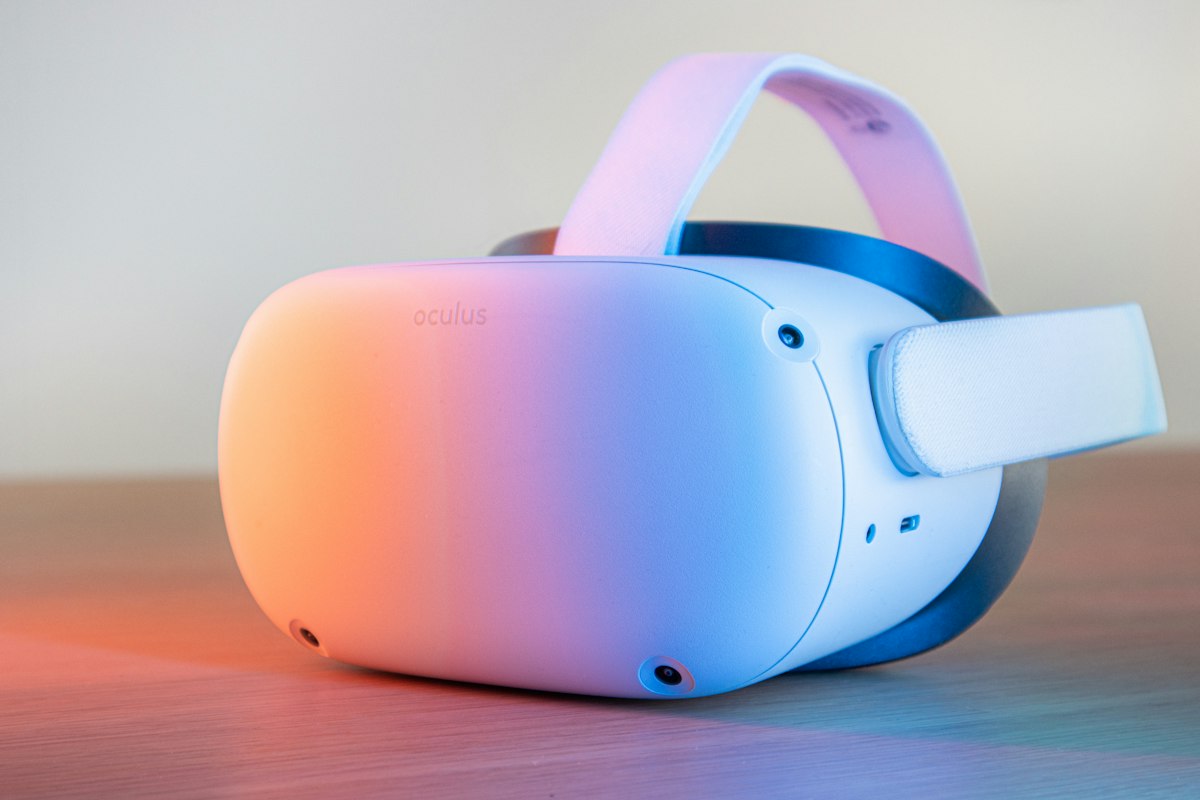
Meta's 74% market share dominance is real and it's built on multiple reinforcing advantages: the largest installed base (by far), the most content (4,000+ titles, $2B+ in developer revenue), Horizon OS as a maturing platform, and aggressive pricing via the Quest 3S ($299). Meta also benefits from the Ray-Ban Meta glasses halo effect, bringing consumers into the Meta XR ecosystem before they buy a headset.
The risks: Meta Reality Labs lost approximately $17.7 billion in 2023 and continued hemorrhaging money through 2025. The company's willingness to sustain those losses reflects Zuckerberg's conviction that spatial computing is existential for Meta's future - but investor patience has limits. The Quest platform needs to demonstrate profitability or a clearer path to it.
2026 trajectory: Stable to modest decline in unit share as competition increases. Meta's Quest 4 (expected late 2026 or 2027) will be a critical catalyst. The Ray-Ban Meta glasses category is growing and may partially offset headset softness.
Apple Vision Pro: Premium Positioning, Long Game
Apple's entry into XR was calculated and deliberate. The Vision Pro at $3,499 was never meant to be a volume device - it was designed to establish spatial computing as a new paradigm and build the developer ecosystem that will power eventual consumer-priced successors. By those metrics, it succeeded: 2,500+ visionOS apps by early 2026, international expansion underway, and enterprise workflows forming around the device.
The Vision Pro captured 5.2% of global XR headset market share by unit count in 2024 (Treeview industry statistics report) despite extreme premium pricing and US-only availability for most of the year. Revenue share is significantly higher.
2026 trajectory: International expansion drives modest unit growth. A rumored "Vision Pro SE" at a lower price point (speculated at $1,999–$2,499) could meaningfully expand the addressable market. The developer ecosystem continues to mature.
Sony PS VR2: A Platform in Limbo
The PlayStation VR2 is a technically impressive device - OLED displays, eye tracking, haptic feedback controllers, 4K HDR - but has struggled to find momentum. The device requires a PS5 ($449+) as a host, limiting the addressable market to existing PlayStation owners willing to spend an additional $549. Limited exclusive title support and competition from standalone VR has constrained growth.
Sony has not announced a PS VR3 and appears to be treating PS VR2 as a mid-cycle product rather than the platform centerpiece it might have been. PC connectivity (added via a firmware/software update in 2024) helped, but hasn't dramatically changed the trajectory.
2026 trajectory: Stable but unspectacular. Sony's XR ambitions may shift toward standalone devices or a next-generation platform.
Pico (ByteDance): Geopolitics as the Ceiling
Pico's hardware quality is legitimately competitive. The Pico 4 Ultra offers specs comparable to Meta Quest 3 at competitive pricing, and ByteDance has demonstrated willingness to invest in content and ecosystem. Pico has strong position in China and has made inroads in European enterprise markets.
The constraint is geopolitical: ByteDance's Chinese ownership creates headwinds in the US market (similar to TikTok dynamics) and introduces uncertainty for enterprise customers concerned about data sovereignty. Export controls and regulatory scrutiny limit international expansion potential.
2026 trajectory: Grows in Asia and Europe; limited US growth due to regulatory environment.
XREAL and the AR Glasses Segment: The Emerging Story
XREAL is the most interesting growth story in XR hardware. The company's Android XR partnership with Google (announced at Google I/O 2025 and formalized in early 2026) positions it as Google's primary consumer-facing AR glasses hardware platform. XREAL's $100M raise in January 2026 funded expansion of its distribution and developer ecosystem.
The AR glasses category - lightweight, all-day wearable, primarily for display and AI assistance rather than full immersive VR - is growing rapidly. Chinese consumer AR glasses (including XREAL, RayNeo, Rokid, and others) shipped 2.75M+ units in 2025. This category is the fastest-growing segment of the XR hardware market by percentage growth.
2026 trajectory: Continued rapid growth as Android XR platform matures and Google marketing amplifies the category.
Samsung Galaxy XR: The 2026 Wild Card
Samsung's Galaxy XR device - announced in late 2025 and shipping in 2026 - is the most significant new hardware entrant. Specifications: micro-OLED displays (matching Vision Pro display quality), 16GB RAM, Snapdragon XR2+ Gen 2, Android XR OS, comprehensive eye/hand tracking. Pricing expected in the $1,500–$2,000 range, positioning it between Meta Quest 3S and Apple Vision Pro.
If Galaxy XR ships with strong software support and Samsung's marketing machine behind it, it could meaningfully reshape the premium MR market. Google's Android XR platform on both XREAL glasses and Samsung headset creates a genuine third platform alongside Meta's Horizon OS and Apple's visionOS.
2026 trajectory: Wild card. Could capture 5–10% of premium MR market if execution is strong.
HTC and Varjo: Committed Enterprise Specialists
HTC (Vive Focus 3, XR Elite) and Varjo (XR-4, Aero) occupy the enterprise premium tier. Neither is chasing mass-market volume; both are building sustainable businesses around industries that require the highest quality hardware regardless of price.
Varjo's devices are used in aviation simulation, surgical training, and automotive design - applications where human-eye resolution and color accuracy justify the $2,000–$6,000 price points. HTC targets the enterprise broader market with a focus on remote work, collaboration, and training.
2026 trajectory: Stable, growing revenue from enterprise contracts. Unit volumes remain small but ASPs are high.
Standalone vs PC VR vs Enterprise MR: Segment Analysis
| Segment⇅ | 2025 Approx. Volume⇅ | Growth Trend⇅ | Primary Buyers⇅ | Leader⇅ |
|---|---|---|---|---|
| Standalone Consumer VR | ~7M units | Declining YoY | Gaming enthusiasts, hobbyists | Meta Quest |
| PC VR (tethered) | ~500K units | Declining | PC gaming enthusiasts | Valve Index, Meta Link |
| Enterprise VR/MR | ~600K units | Growing 10–15% | Healthcare, manufacturing, defense | Meta Quest for Business, HoloLens, Varjo |
| Premium Consumer MR | ~500K units | Growing | Early adopters, enterprise prosumers | Apple Vision Pro |
| AR Glasses (lightweight) | ~3M+ units | Growing 40%+ | Tech enthusiasts, enterprise | XREAL, RayNeo, Meta Ray-Ban |
The overall picture: Traditional VR headset segments are flat to declining. Enterprise MR and lightweight AR glasses are the growth segments. This bifurcation reflects a maturing market where different use cases are finding their appropriate form factors.
What Winning Actually Looks Like in 2026
The competitive dynamics in XR hardware are shifting. "Winning" means different things in different segments:
- Consumer VR: Meta wins on installed base, content library, and price/performance. The winner here is already determined for the near term.
- Enterprise MR: A three-way race between Apple Vision Pro, Samsung Galaxy XR, and Microsoft HoloLens/Mesh ecosystem. Early enterprise standardization decisions made in 2026 will compound.
- AR Glasses: XREAL/Google Android XR platform vs Meta Ray-Ban glasses. The form factor is validated; the winner is not yet clear.
- Enterprise Simulation: Varjo and HTC operate in a niche where quality is non-negotiable. They don't compete on price.
For developers: Platform selection matters. Building for Meta Quest reaches the largest audience by far. Building for Apple Vision Pro reaches the highest-income, enterprise-adjacent audience. Building cross-platform via OpenXR is the risk-mitigating approach that increasingly makes sense as the platform landscape fragments.
Reality Atlas maintains a comprehensive hardware directory where you can compare headset specifications, read user reviews, and identify which enterprises are deploying which devices. Use it to inform purchasing and development platform decisions.
2027 Hardware Outlook
- Meta Quest 4: Expected late 2026 or 2027; likely targets improved passthrough, lighter form factor, and enhanced AI integration. Could reignite consumer VR growth.
- Apple Vision Pro 2 / Vision SE: Rumored lower-priced successor that could open the consumer tier for Apple's platform.
- Samsung Galaxy XR 2: Follow-on device with refined software and broader distribution.
- Android XR AR glasses ecosystem: Multiple Android XR glasses from XREAL, Samsung, and others will ship, creating a genuine consumer AR glasses category.
- Qualcomm Snapdragon XR4+: Next-generation chipset will enable thinner, more capable standalone devices.
FAQ: XR Hardware Market Share 2026
Who has the most XR market share in 2026?
Meta dominates XR headset market share with approximately 74% of global units, driven by the Quest 3 and Quest 3S lineup. By revenue, Apple captures a disproportionate share despite lower unit volume, due to the Vision Pro's $3,499 price point.
How many XR headsets were shipped in 2025?
Meta shipped approximately 5.6 million Quest headsets in 2025. Total global AR/VR headset shipments were approximately 9.6 million units in 2024 (IDC), with 2025 expected to be similar or slightly lower before a potential recovery in 2026.
Is the VR market growing or shrinking?
Traditional VR headset unit shipments have declined for three consecutive years (2022–2024). However, the broader XR market is growing due to enterprise adoption, premium MR devices (Vision Pro), and the fast-growing AR glasses category. Revenue growth is positive even as some unit segments decline.
What is Samsung Galaxy XR?
Samsung Galaxy XR is a high-end mixed reality headset running Google's Android XR platform. Announced in late 2025 and shipping in 2026, it targets the enterprise MR market and premium consumers with micro-OLED displays, 16GB RAM, and comprehensive spatial tracking. It represents Google and Samsung's joint bet on the enterprise MR segment.
Which XR headset should enterprises buy in 2026?
It depends on the use case. For enterprise training and general-purpose VR: Meta Quest for Business offers the best content library and price point. For high-precision MR workflows (design review, surgery planning): Apple Vision Pro or Varjo XR-4 depending on requirements. For Microsoft-centric enterprise IT environments: Microsoft HoloLens or HTC Vive with Mesh integration. Browse Reality Atlas's hardware directory for detailed comparisons.

Related reading: State of XR 2026: Market Size, Growth & Industry Outlook · Biggest XR Acquisitions of the Last 3 Years
See also: Apple Vision Pro, Meta Quest 3S, Meta Quest 3, Meta Ray-Ban (Display), HTC Vive Focus 3, PlayStation VR2, PlayStation VR, Samsung Galaxy XR, Varjo XR-4, Microsoft HoloLens 2 on Reality Atlas
📚 Sources & References
- IDC Quarterly AR/VR Headset Tracker, Q3 2023, Q4 2024, Q4 2025.
- Counterpoint Research, "VR/AR Headset Market Monitor," 2025.
- XREAL press release citing IDC data, January 2024.
- Bloomberg / Ming-Chi Kuo analyst estimates for Apple Vision Pro units.
- Circana (formerly NPD) and VideoGamesChronicle for PSVR2 sales tracking.
- Forrester Research, "Enterprise XR Headset Landscape," 2025.
- Meta Q4 2025 earnings call (Reality Labs segment).